How megalodon lived
A warm-water hunter of whales, dolphins and seals.
How this site works. Every fact is in our own words and linked to its source, beside it. Megalodon is known almost only from teeth, so many numbers are estimates. Where good sources disagree, we show each version in a “Sources differ” box.
What it ate
With its big serrated teeth megalodon ate meat: most likely whales and large fish, and probably other sharks. NHM
Its prey ranged from dolphins to animals as big as humpback whales. NHM
Smithsonian Ocean lists toothed and baleen whales, seals, sea cows and sea turtles, and probably fish and other sharks too. Smithsonian
Britannica adds that the young probably went after smaller prey while adults hunted bigger whales. Britannica
Evidence in the bones
Some fossil whale bones carry cut marks from megalodon teeth, and some even hold the broken-off tips of teeth. NHM
Sometimes a whole megalodon tooth is found stuck in a whale bone. Smithsonian
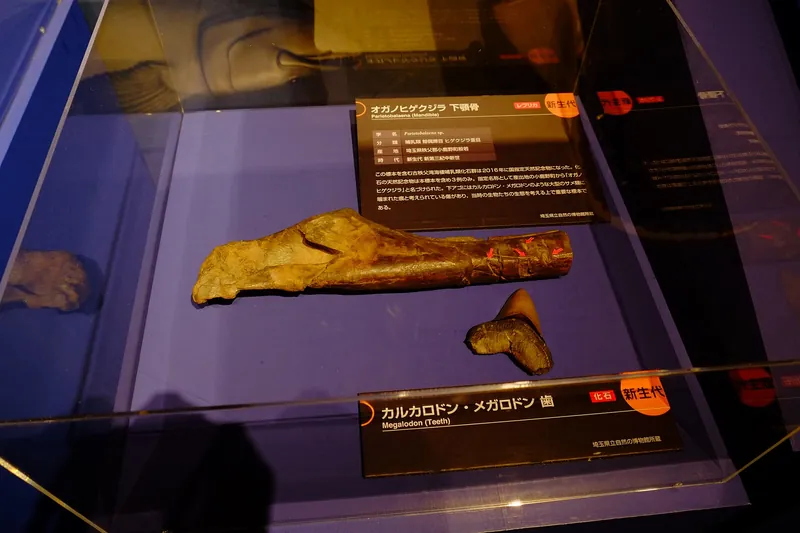
From tooth marks, scientists think it struck larger prey such as small whales in the chest, punching through their ribs, and may have rammed smaller prey to stun it. Smithsonian
Top of the food chain
Megalodon was an apex predator. Fully grown ones probably had no predators, but the young may have been at risk from other big sharks such as great hammerheads. Britannica
Where it lived
Megalodon was adapted to warm tropical and subtropical seas around the globe. NHM
Its fossils come from shallow tropical and temperate seas along the coasts and continental shelves of every continent except Antarctica. Britannica
Smithsonian Ocean says it lived in most of the ocean except near the poles, with the most northerly fossils found off Denmark. Smithsonian
Warmer than the water
Like great whites, megalodon was probably not entirely cold-blooded: heat from its swimming muscles kept parts of its body warmer than the water, which is called regional endothermy. Britannica
The 2025 authors say its body temperature was similar to, or maybe slightly higher than, that of great whites. Shimada et al. 2025
Babies and nurseries
Megalodon is thought to have given birth to live young. Britannica
The 2025 study supports the idea that megalodon pups grew inside the mother and ate unhatched eggs there, as some living sharks do. Shimada et al. 2025
Did megalodon use nurseries? Sources differ
- A 2010 study described the first definite megalodon nursery, in the Gatun Formation of Panama, about 10 million years old. Pimiento et al. 2010
- Most of the teeth there were very small, from young sharks and newborns estimated at 2 to 10.5 metres long. Pimiento et al. 2010
- Smithsonian Ocean lists nursery sites in Panama, Maryland, the Canary Islands and Florida. Smithsonian
- A 2022 study questioned the nurseries: sites full of small teeth may just be places where warm water meant the sharks grew smaller. NHM news, 2022
- The 2025 study also found nursery areas less likely to have been needed. Shimada et al. 2025
The Panama find made megalodon nurseries famous. More recent studies suggest the small teeth may have other explanations.
Our view: bite marks on fossil whale bones are some of the most direct evidence we have of how an extinct animal behaved. They are worth more than a hundred reconstructions.
Next: why megalodon died out →